Program
Arvo Pärt
Summa – Choral Arrangement
Piotr Ilyich Tchaikovsky
Violin Concerto in D major, Op. 35
Intermission
Johannes Brahms (→ bio)
Symphony No. 2 in D major, Op. 73
Featuring
Other information
The event is about 2.0 hours long.
About the event
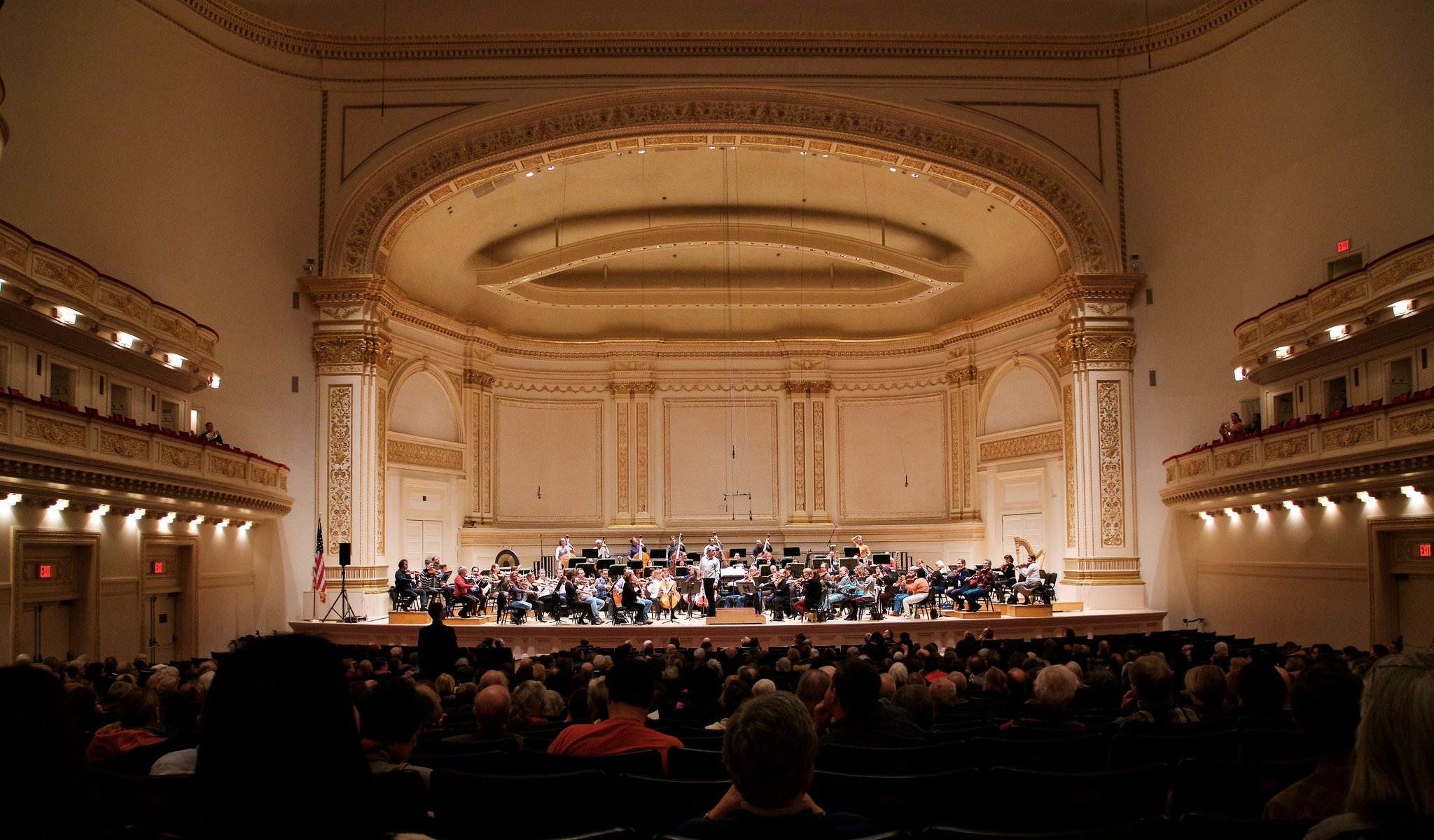
A Hungarian orchestra singing an Estonian piece, an Israeli violinist playing a Russian concerto, and then the symphonic sounds of romantic relief to round up the experience. On the day following the grand Mahler concert, the Budapest Festival Orchestra will return to Carnegie Hall with a program conjuring up three worlds that are different but equally rich in melodies. After the 90-year-old Arvo Pärt’s a cappella credo, the concerto of Tchaikovsky, who combined musical elements from Western Europe and Russia with exceptional skill, will be performed with the solo part played by Maxim Vengerov. This Grammy and Gramophone Award-winning artist, considered one of the greatest violinists in the world, is a regular performer at the most prestigious concert halls. He is also a UNICEF Goodwill Ambassador, bringing music to the poorest places with his 1727 Stradivarius. The concert will be concluded by the serene symphony of Johannes Brahms, written when he had finally stepped out from Beethoven’s shadow.
“I am alone with silence. I have discovered that it is enough when a single note is beautifully played. This one note, or a silent beat, or a moment of silence, comforts me.” Arvo Pärt, considered the most prominent figure in contemporary church music composition, found inspiration in Gregorian chant to create his own minimalist style, tintinnabuli, which focuses on timbre and each individual note. The Latin term means “little bells” and refers to the character of the subtle sounds. Summa, composed in 1977, originally for voices (although an instrumental version was also written later), fits into the series of slow, meditative works that follow strict rules and are constructed from a limited number of notes. The piece, characterized by circular musical motion, is based on the text of the Latin Credo, the Apostles’ Creed.
To escape from his failed marriage and after his suicide attempt, Tchaikovsky withdrew to Clarens, and composed wonderful pieces on the shores of Lake Geneva. He wrote his violin concerto in 1878, within a few weeks, and polished it to perfection following the advice of his student and friend, violinist Iosif Kotek. Although the piece’s dedicatee, Lipót Auer decided that it was unplayable, the concerto is now one of the most often played works in its genre. The opening movement with its rather generous melody alternately displays lyrical pas-de-deux and grandiose forces. Following the subtly arranged and elaborated, laid-back slow movement, the often rustic, Slavonic-sounding rondo finale explodes without a break.
It took Brahms about fifteen years to find his own symphonic voice after Beethoven’s Ninth. In contrast to that dramatic struggle and dramatic achievement, the Second Symphony flowed almost effortlessly from the composer’s hands: the score was completed during a single summer. The tranquility of the beautiful Wörthersee, where the work was composed, is echoed in the music: instead of the earlier pain and struggle, here a pastoral mood prevails. Light and darkness, lyricism and power, intimacy and openness converge in the piece, which is built from the three-note motif introduced in the bass at the opening of the first movement. The slow movement introduced by the cello brings a few clouds, but the oboe solo over a plucked accompaniment banishes them in the third movement. The finale is among Brahms's most unbridled expressions in music.
