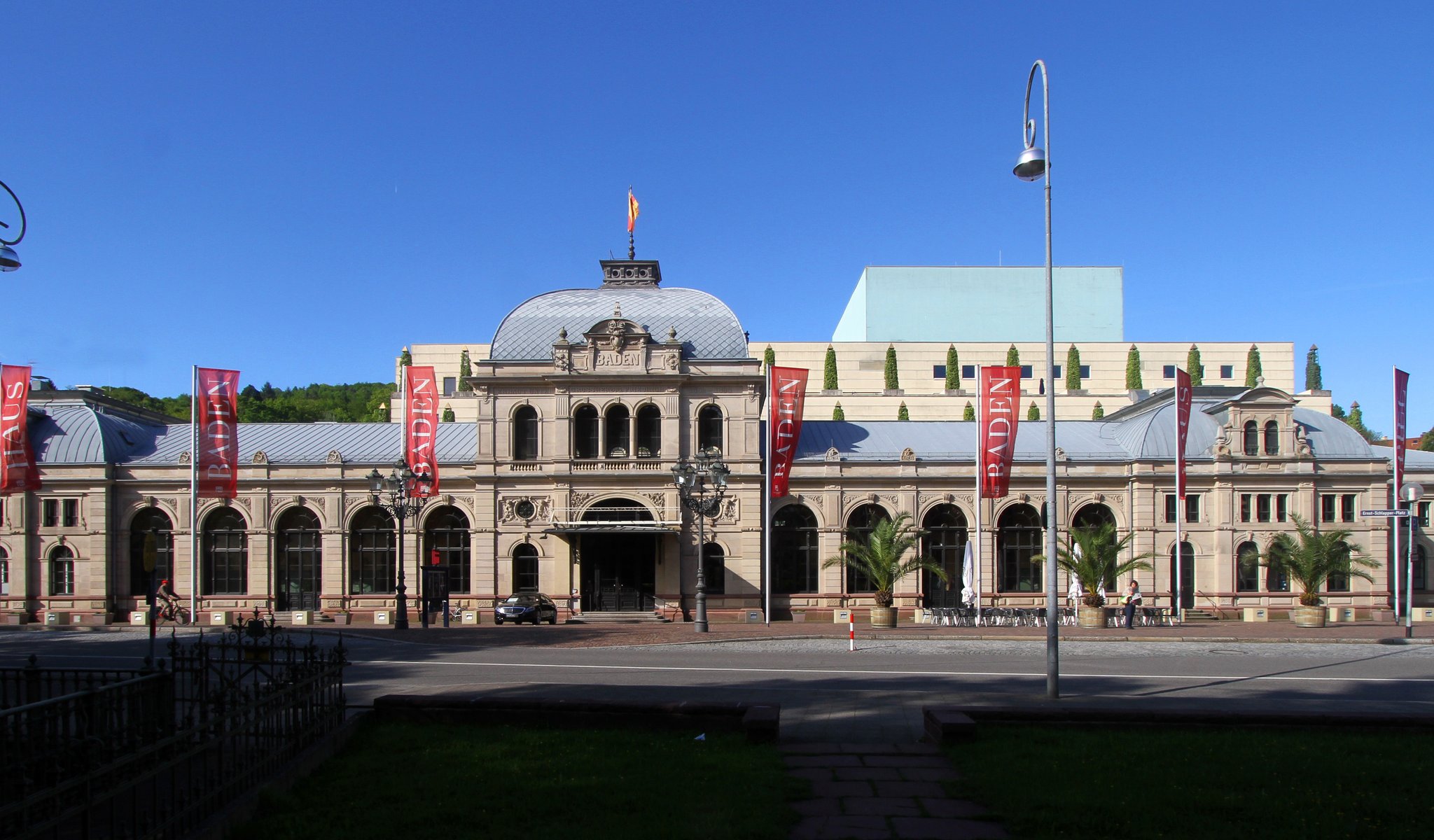
Winterfestspiele Baden-Baden: Bach
Höhn, Hagen, Vermeulen, Müller-Brachmann, Vocalconsort Berlin, Fischer
Program
Johann Sebastian Bach (→ bio)
Christmas Oratorio – Cantatas 1, 2, 3 and 6, BWV 248
Featuring
Repetiteur
glockenspiel
assistant conductor
Other information
The event is about 120 minutes long.
About the event
Star singers, a world-class choir and the best-known holiday masterpiece – featuring four cantatas from Bach’s Oratorio, including the first, celebrating the birth of Jesus Christ and the final cantata, exalting the power of the Lord. The role of the Evangelist will be performed by Swiss tenor Raphael Höhn, who is particularly at home in the Baroque repertoire and is highly sought after as the Evangelist in Bach’s Passions. Mirella Hagen will sing the soprano parts, whose lyrical voice has been described by critics as captivating, with elegant and crystal-clear text delivery. Also appearing on stage are Olivia Vermeulen, whose time-stopping voice is “clear as a bell,” and Hanno Müller-Brachmann, a singer with a flexible baritone. The choral movements will be performed by Vocalconsort Berlin, regarded as one of Germany’s most versatile vocal ensembles.
The title Christmas Oratorio is somewhat misleading. Not that it doesn’t have to do with Christmas: in terms of topic and lyrics, the piece indeed charts a beautiful course through the holiday period of December 25 to January 6. Comprising six major parts, the Oratorio describes six significant events from the days of Christmas to the circumcision of Jesus, the first Sunday of the New Year and the Epiphany. Johann Sebastian Bach composed the piece in Leipzig for the turn of the years 1734-1735, and because the work was intended for six separate occasions, each of the parts were appropriate as stand-alone pieces. In other words, these are six cantatas, making the work more like a cantata cycle than an oratorio. The sixty-six movements in total tell the story of the birth of Christ through Biblical texts and poetry, including the Annunciation, the Adoration of the Shepherds, the Naming of Jesus and the Adoration of the Magi.
Of the four cantatas to be performed at the concert, the first celebrates the birth of Christ, hailed by trumpets and timpani. The next part delivers an entirely different sound, evoking pastoral music accompanied by oboes and oboe da caccia. This is the only cantata in the piece which begins with an instrumental introduction as opposed to a celebratory choir. In the third part, the shepherds arrive at the manger singing a joyous choral piece and the fanfare-like instrumentation of the first cantata. In the final part, which later appeared as a stand-alone cantata as well, the three wise men and Herod also appear, with the same choir as before singing a majestic ode.
Like the Passions, Bach’s Christmas Oratorio also includes alternating texts from the Gospels and texts reflecting on them. Bach was likely assisted by his regular creative partner, Christian Friedrich Henrici, known as Picander, in drafting the poetic contemplations, but Bach himself also took the pen for writing the libretto. The words of the Evangelist are performed as a recitativo secco; the angels are heard over the sound of strings; and the liturgical songs are performed as four-part choral interpretations, composed beautifully and in a complex way, as is the norm with Bach. The composer set the poetic lyrics to music as recitatives with instrumental accompaniment and as arias. The latter are all original compositions, unlike many of the choral movements, which Bach borrowed from his earlier secular cantatas, and his lost Mark’s Passion. The atmosphere of the movements composed earlier as birthday greetings is an excellent match for the eruption of joy at the birth of the savior. From a musical perspective, the piece is a highly cohesive whole, a trait further strengthened by the use of D major keys as well as the frame-like recurrence of the first choral melody in the final movement.
