Program
Featuring
Conductor
Other information
The event is about 1.8 hours long.
About the event
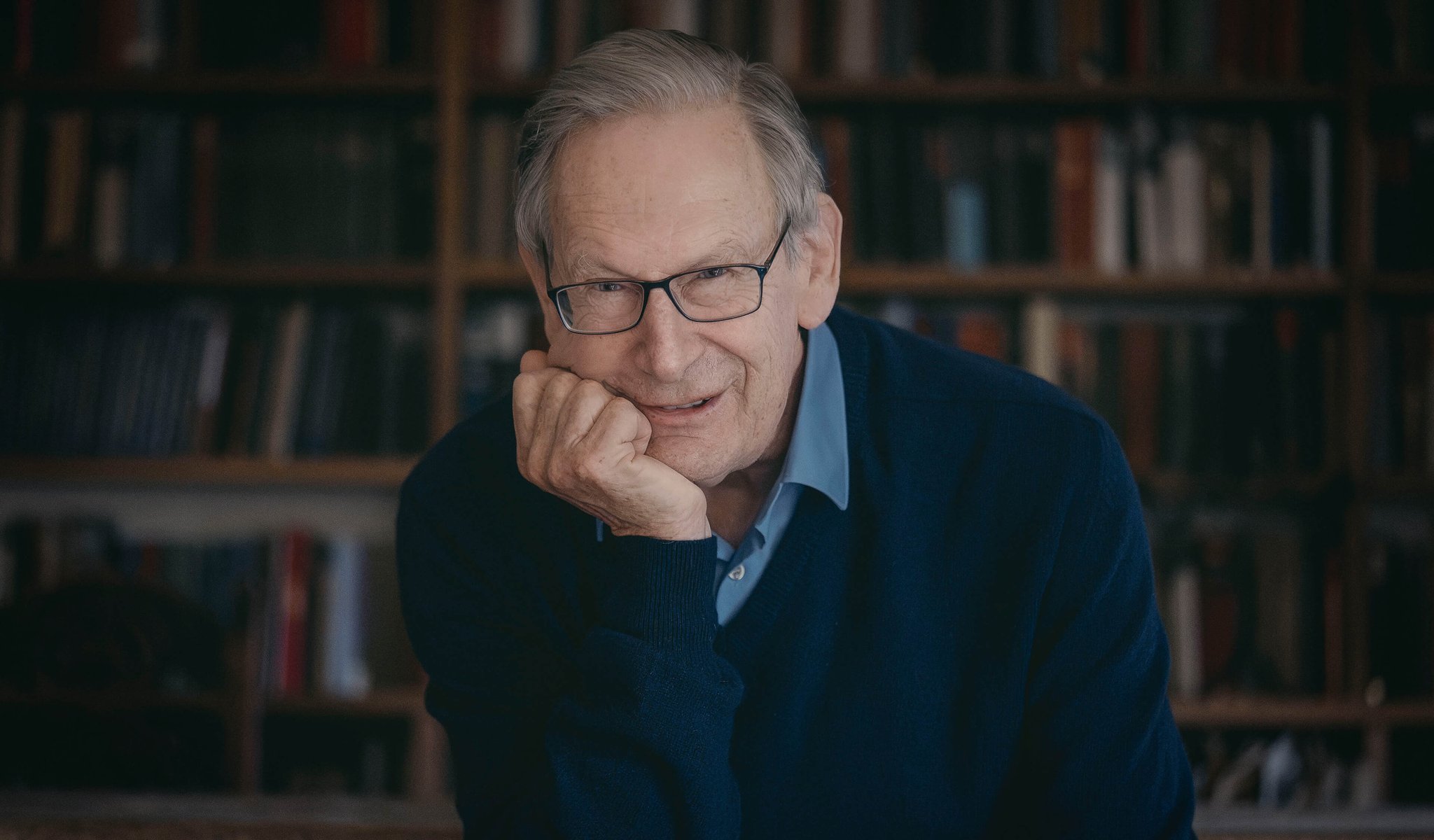
The legendary Sir John Eliot Gardiner will conduct the Budapest Festival Orchestra for the first time! The Honorary Doctor of the Liszt Academy and multiple Grammy Award-winning conductor rose to international fame mainly through his performances of early music, but he also enjoys exploring Romantic compositions. He conducts with “boundless energy,” to borrow a characterization from The Guardian, be it Joseph Haydn or Jean Sibelius, the composers featured in his program. Although the two composers arguably have little in common, the dual threads of patriotism and cosmopolitanism run through the concert. The evening’s centerpiece is a work from Haydn’s triumphant London period, composed following his release from decades of service to the Esterházy court. The program concludes with a Sibelius symphony inspired by an excursion to Italy. With the opening piece, BFO musicians will once again demonstrate their talents as a choir with a deeply moving performance of the heart-wrenching song by the Finnish composer.
In the late nineteenth century, as Tsarist Russia began to curtail Finland’s autonomy, an increasing number of patriotic artworks were created in response. During this period, Sibelius composed Finlandia, along with his 1898 cycle of six songs for male choir, which were notable for their defiant use of Finnish texts. In 1904, he composed the closing piece of the series for mixed choir. The work draws on the final poem in Aleksis Kivi’s novel Seven Brothers, later set to music by several other Finnish composers, including Oskar Merikanto and Einojuhani Rautavaara. The piece, marked “very slowly” and dedicated to the memory of Sibelius’s young daughter, is the lament of a grieving mother carrying her child to the bier.
“I am Salomon from London, and I have come to fetch you.” With this bold self-introduction, violinist and impresario Johann Peter Salomon prompted Joseph Haydn to travel twice to England, journeys that ultimately gave rise to the Austrian composer’s final twelve symphonies. Haydn himself conducted the highly successful premiere of his penultimate symphony, or the so-called “Drumroll Symphony,” in 1795. The nickname refers to the opening of the first movement, when a timpani roll, for which there are no dynamic instructions in the score, invites varied interpretation. The slow, ominous, and harmonically ambiguous introduction evokes the Dies irae, material which reappears unexpectedly in the livelier main section. A slow movement presenting variations of two contrasting themes is followed by a Ländler-like minuet that gradually darkens in tone before the symphony concludes with a sparkling and enchanting finale built on a four-note motif.
During his trip to Italy, Sibelius contemplated works inspired by Don Juan and The Divine Comedy, though these ideas took musical form only later, in his Symphony No. 2. Composed in 1902, this symphony garnered Sibelius acclaim all over Europe, something no Nordic composer had ever achieved before. Its distinctive tonal architecture, the dark shades of the winds, the folk themes, and the motifs of national color proved an ideal combination. This was the last composition in which Sibelius paid open homage to classical forms and his greatest predecessors. The building blocks of small motifs in the first movement and the clattering scherzo, the uninterrupted transition from the third movement to the fourth, and the solemn finale, for instance, all evoke Beethoven.
