Fischer and The Magic Flute
Prégardien, Selig, Gaul, Wunderlin, Fischer
Program
Wolfgang Amadeus Mozart (→ bio)
The Magic Flute, K. 620
Featuring
Conductor and director
Cast
- Samantha Gaul (Pamina)
- Julian Prégardien (Tamino)
- Franz-Josef Selig (Sarastro)
- Alina Wunderlin (Queen of the Night)
- Sarah Maria Sun (Papagena)
- Markus Werba (Papageno)
- Mirella Hagen (First Lady)
- Olivia Vermeulen (Second Lady)
- Marie Seidler (Third Lady)
- Stuart Patterson (Monostatos)
- Peter Harvey (Speaker / Second Priest / Second Armored Man)
Other information
The event is about 3.0 hours long.
About the event
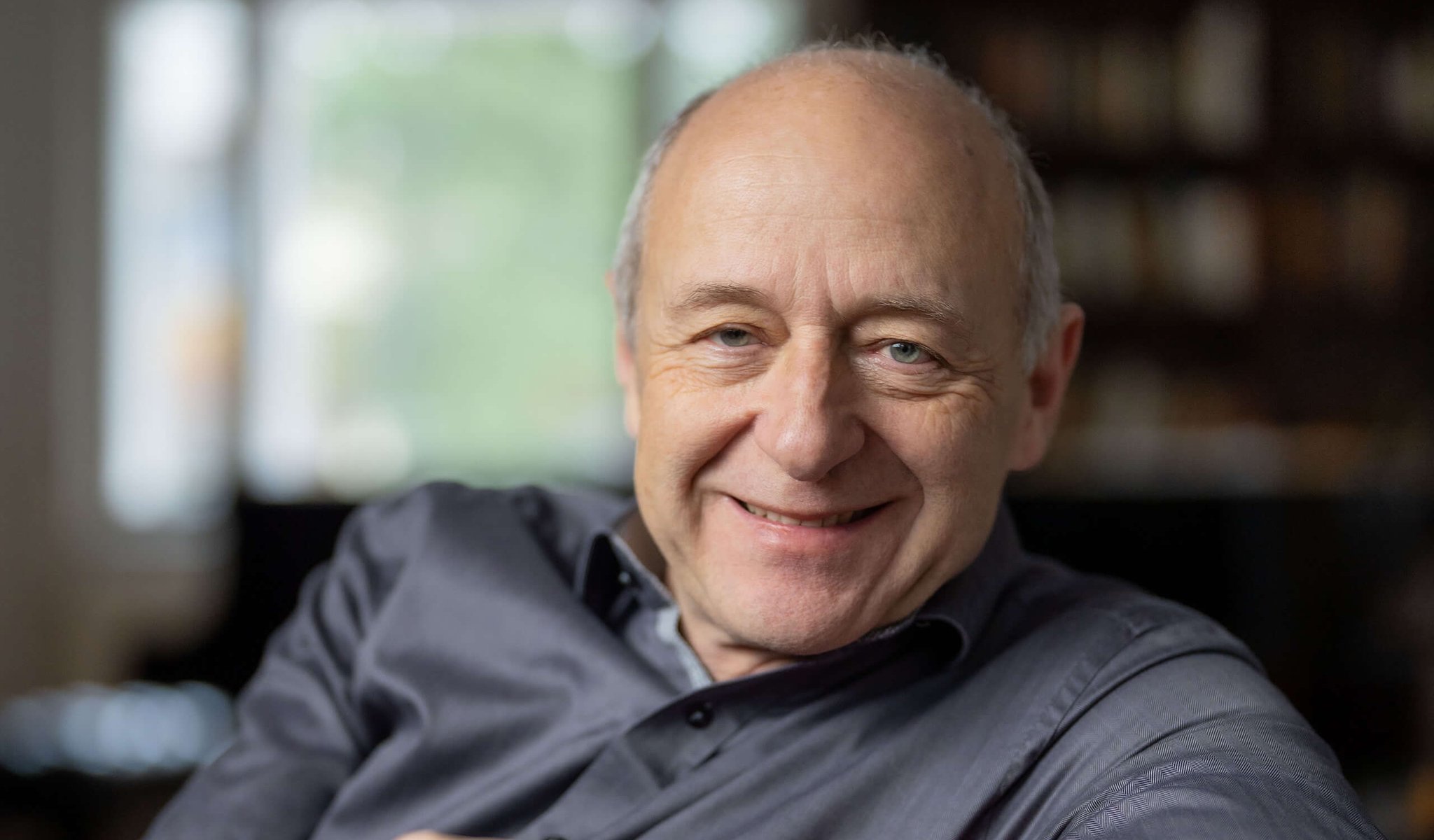
“The rays of sun chase night away.” If there is an opera for everyone, an opera about the very essence of life, it’s The Magic Flute. For the first time since 2015, Iván Fischer will once again bring to the stage Mozart’s philosophical tale, where good and bad, light and darkness, right and wrong, courage and fear, wisdom and superstition, vengeance and mercy are juxtaposed. The opera, which is Mozart’s last work for the stage, is an initiation ceremony and a moral tale about the journey to adulthood. “It’s an inscrutable work of magical power,” says Fischer, who is particularly awed by the opera’s optimism, humor, playfulness, fairy tale-like quality, deep humanism, or, in a single word, complexity. The international cast includes Mozart specialists from the world’s leading opera houses, several of whom are already familiar to the BFO’s audiences.
“The Magic Flute is a childhood experience for everyone that accompanies them throughout their lives. Because this opera speaks to both children and adults.” Fischer shares his own experiences, as he and his brother participated in a production of the work held in the Opera House as children. Much later, the Festival Orchestra’s opera performances also traditionally began with a semi-staged production of The Magic Flute at the Liszt Academy in the early 1990s.
The deeper we delve into the opera by Mozart and librettist Emanuel Schikaneder, which premiered in 1791, the more layers we discover in the fabric of archetypal characters, musical symbols, and ideas explored. “We shouldn’t choose between the fairy tale, the initiation ceremony, the struggle between good and evil, and playfulness. Each of them is needed to present the beautiful unity of The Magic Flute,” Fischer explains.
More daring scholars even saw in the opera a parody of Maria Theresa and criticism of the social hierarchy of the time, but one thing is certain: the creators, who were members of the Vienna lodge, wove numerous Masonic references into the work. The trials to be endured by those seeking the light, the rite preceding admission into the temple, the triumph of the ideas of the Enlightenment, and even the number three appearing at the very beginning of the overture are all Masonic parallels. The characters face decisions. They can choose the simpler solution and remain content with everyday pleasures or they can embrace the uneven path leading to virtue. By the end of the story, not only will Pamina and Tamino come closer to the sublime world of Sarastro, but even the cowardly Papageno will find new meaning in life.
Beyond excellent vocal technique, these nuances demand profound expressive power and empathy from the soloists. The Pamina of Samantha Gaul, who may be familiar to BFO audiences from the 2024 production of Ariadne, is “insecure, searching, disturbed and in love” (Leipziger Volkszeitung), and “[Gaul’s] very natural performance also reflects the nuances and unspoken aspects” (Sächsische Zeitung). Julian Prégardien, who performed Bach with the BFO in the previous season, sings the role of Tamino, Pamina’s partner, a part he has played in opera houses from Berlin to Cleveland. The wise Sarastro is portrayed by Franz-Josef Selig, who performed this role in a production of the opera under Sir Colin Davis that was filmed and commercially released. Prégardien will bring his usual warm tone and clear articulation. The Queen of the Night will be sung by Alina Wunderlin, whose radiantly bright, crystal-clear voice combines “razor-sharp coloratura and a brilliant stage presence” (Das Opernglas). Sarah Maria Sun, whose repertoire spans over two thousand works, will perform in the role of Papagena, and Markus Werba will portray Papageno (Werba made his debut in the role at the Vienna State Opera in 2010). The Three Ladies will be sung by Mirella Hagen, whose voice is “effortless and ethereal,” Olivia Vermeulen, who “can stop even time itself,” and Marie Seidler, who sings “with strength and flexibility.”
A joint production of the BFO, Müpa Budapest, the Ivan Fischer Opera Company, and the Vicenza Opera Festival.
