Fischer and Beethoven’s Ninth – Storytime with Iván
Fischer
Program
Ludwig van Beethoven (→ bio)
Symphony No. 9 in D minor, Op. 125
Featuring
Conductor
Soloist
- Maria Bengtsson (soprano)
- Olivia Vermeulen (alto)
- Andrew Staples (tenor)
- Hanno Müller-Brachmann (basso)
With
Choir master
Other information
The event is about 1.2 hours long.
About the event
“The Ninth,” referred to with this simple term, is a masterpiece known to everyone. Beethoven’s last, longest, and most monumental symphony is at once the embodiment of the ideas of the genius and the rebellious artist, as well as a celebration of the whole of humankind. It is a work that pushes and indeed breaks down boundaries in every sense of the word, as it incorporates into a purely instrumental genre the human voice, which sings in the finale of how “all men become brothers.” Along with Beethoven’s universal musical and philosophical ideas, audiences can enjoy the return of the BFO’s much-loved guest artists, a Swedish soprano, a Dutch alto, an English tenor, and a German bass-baritone, who will ensure that this concert, where, together with the Pan-European Choir and the Hungarian National Choir, they will sing Schiller’s immortal lines (now the text of the European Union anthem), will traverse national boundaries.
In 1817, the London Philharmonic Society invited Beethoven to London and commissioned him to compose two new symphonies. Beethoven envisioned a piece in D minor throughout, and he considered the idea of a symphony with a choir. By 1822, it had become clear to him that the two ideas should be combined in one composition. Therefore, after the first three movements, which more or less follow eighteenth-century traditions, Beethoven included four vocal soloists and an enormous chorus in the closing part, which meant that, although there had been some examples of French revolutionary symphonies with vocal parts, he made history. For the text, he chose Schiller’s Ode to Joy, which he had been planning to set to music since his Bonn years.
The opening movement, which grows from a hushed silence and culminates with the sudden arrival of the main theme, begins the work with a musical portrayal of creation. Instead of following the usual order of movements, Beethoven then gives us a scherzo, which is neither light-hearted nor charming but rather dark and obsessive, with an obstinate rhythmic thumping and a complex fugue-like texture. The more hymn-like middle section, however, foreshadows the joy of the finale. The slow movement provides a pleasant contrast to the earlier storms. Through a series of variations, Beethoven intensifies the passion of two musical themes. In the style of a “recap of previous episodes,” the finale leads us once again down the path of chaos, struggle, and relief via the themes of the earlier movements, making the entry of the first vocal soloist a truly cathartic experience. The monumental series of variations that begins here culminates in an explosion of life-affirming ecstasy at the conclusion of the work.
Due to the increasing popularity of Italian Romantic opera, Beethoven originally would have preferred to have held the premiere somewhere else, but following a petition from the local public, the symphony was performed in Vienna on May 7, 1824. The composer, who by that time was completely deaf, had to be turned around by one of the soloists to see the ovation, which was one of the greatest triumphs of his life. The composition has been a raving success ever since, particularly when performed with soloists like the “exceptionally touching” Maria Bengtsson (The Daily Telegraph), the “wonderfully luminous and captivating” Olivia Vermeulen (Frankfurter Allgemeine Zeitung), the “profoundly subtle and expressive” Andrew Staples (Bachtrack) or Hanno Müller-Brachmann, “a singer with a firm, dark and exciting voice” (The New York Times).
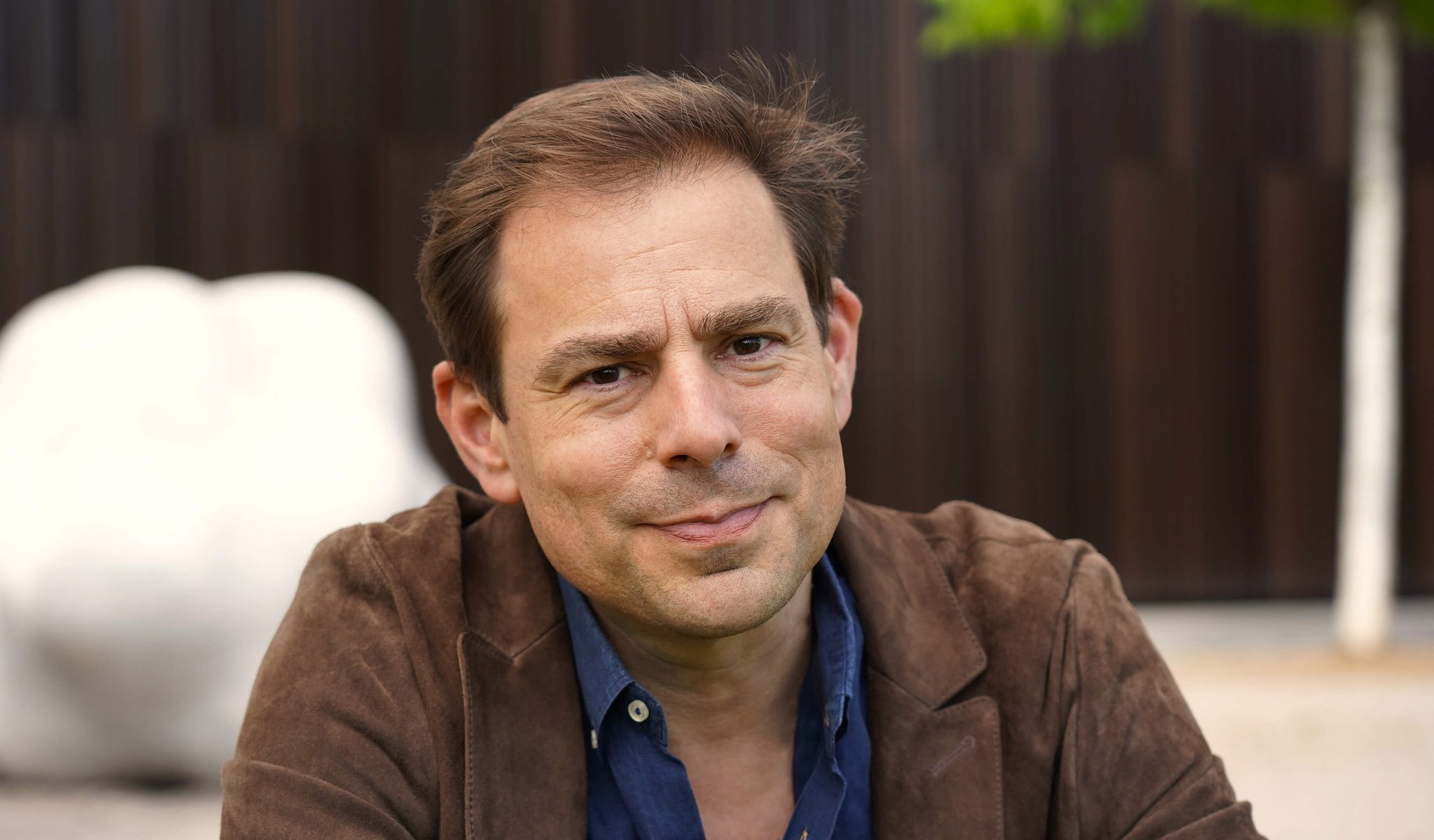
The concert is part of the Storytime with Iván series: a special occasion for the audience to get even closer to the music – and to the conductor himself. Iván Fischer not only conducts the pieces, but also shares his personal thoughts and entertaining stories with the audience between the works. At the end of the concert, you can also ask him questions – be it about music, musicians, or anything that came to mind during the concert.
